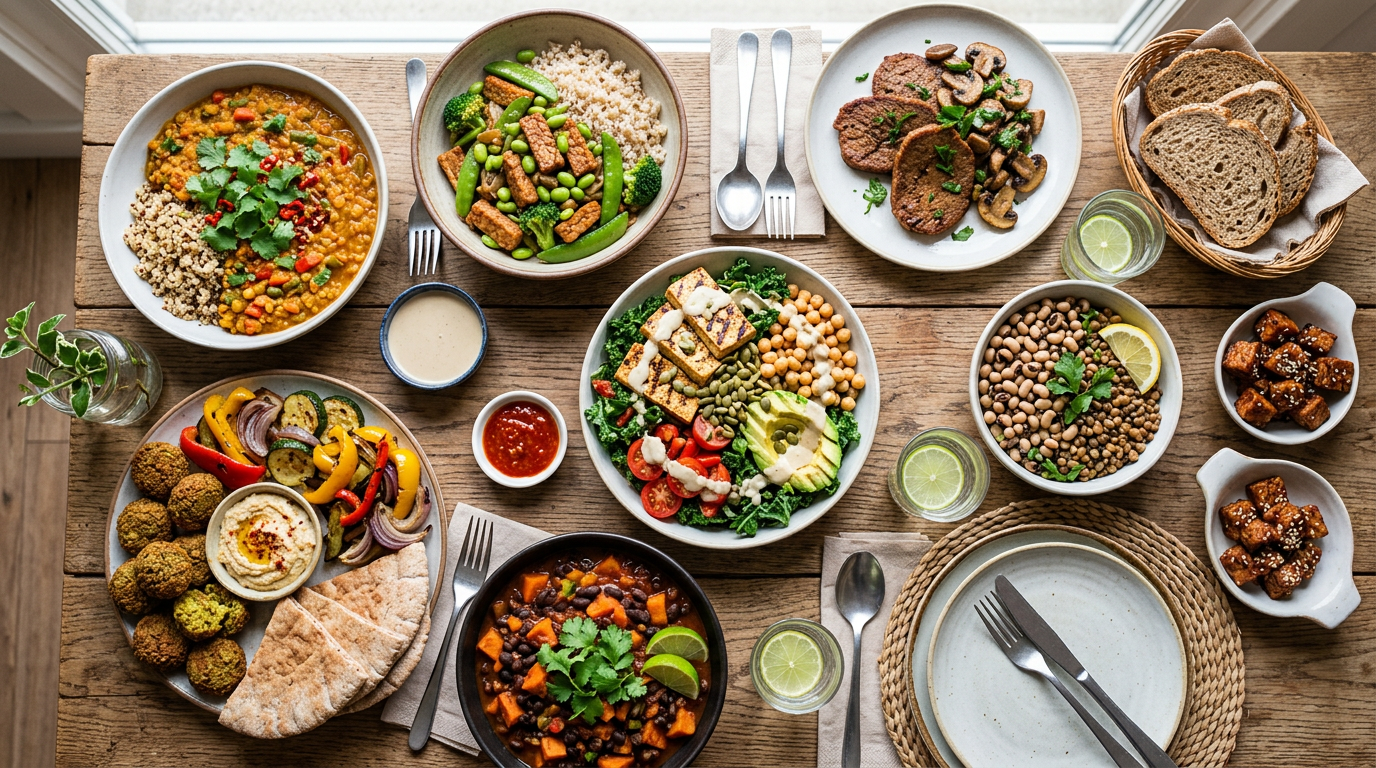
Understanding Plant-Based Diets: Myths & Facts explores common misconceptions about vegan and plant-based eating, backed by nutrition research and practical guidance.
Plant-Based Diet Myth #1: Plant-Based Diets Lack Protein
The biggest plant-based diet myth is that you won’t get enough protein. In fact, the Dietary Guidelines for Americans recommend that adults eat a variety of proteins that add up to about 50 grams a day. However, this is unique for everyone based on your age, health condition and goals.
Is it better to get protein from red meat? Absolutely not! Studies show that eating too much red meat could cause cancer. Did you know that the World Health Organization declared processed meat a category 1 carcinogen in 2015? They have known this for over 11 years and many of us have no idea!
The truth is our protein requirements can easily be met by a plant-based diet. In fact, Plant-based diets average 1.5 – 2x the recommend daily amount of protein. New flash, all plants contain all nine essential amino acids. The idea that plant foods are incomplete proteins is no longer valid.
Have you ever heard the term Kwashiorkor? Me either because it practically nonexistent: Kwashiorkor is the term used for protein deficiency, and it is very difficult if you’re getting sufficient calories to maintain your weight.
The take-away here is that if you are eating enough total calories to maintain your body weight, a healthy plant-based diet easily provides enough of the nine essential amino acids your body needs.
Plant-Based Diet Myth #2: Plant-Based Diets Are Nutritionally Insufficient
Let’s think about this for a minute. Many plants provide multiple nutrients within a single serving. The majority of the time we will be consuming more than 1 plant-based food at a time (fruit, vegetables, beans, legumes, nuts, seeds)
We’ve already established that there is protein in almost all plant-based foods, Nutrients like iron, and calcium are all available from non-animal sources.
There are virtually no nutrients in animal-based foods that are not better provided by plants.
Iron is an element found in the earth and absorbed through the roots of plants. Heme iron, mostly found in animal foods, is absorbed by the body in excess because the body is not able to regulate it. Studies show that a high intake of heme iron may increase risk of heart disease and cancer due to oxidative damage.
Non-heme iron, mostly found in plants, is naturally in a form that our bodies were designed to use. Our body only absorbs what it needs. The best plant sources for iron include whole grains, legumes, green leafy vegetables, nuts and seeds.
Calcium is also an element found in the earth and absorbed through the roots of plants. While cow’s milk is the #1 source of calcium for people of the United States, it is the #1 source of saturated fat. Not only is it one of the top allergens in the U.S., but dairy also increases our risk of prostate cancer, bone & hip fractures, cardiovascular disease, premature death and other cancers. Plant sources of calcium are absorbed 2x’s as well as animal milk. The best plant sources for calcium include dark leafy greens, almonds, sesame and chia seeds, legumes, soy products like tofu, edamame, tempeh, fortified plant milks, and dark-strap molasses.
For most people dairy is the hardest to give up, and for good reason. Cheese contains casein, which break down into caso-morphines in the body. These caso-morphines have a morphine-like compound that trigger dopamine receptors in our brain and attaches to the same brain receptors that heroin and other narcotics do, making cheese mildly addictive to both humans and calves. Unfortunately, casein is the main protein found in milk products. Research suggests that casein — and likely most other animal proteins — is a far more relevant carcinogen than any pesticide, herbicide, food additive, or noxious chemical ever tested.
Plant-Based Diet Myth #3: Plant-Based Diets Are Too Expensive
Plant-Based diets could be expensive just like any other dietary approach. It depends on your shopping habits and choices. Any dietary approach may get expensive if you focus on premade meals and pre-prepped ingredients. Purchasing individual ingredients actually saves you money. Meal planning and making meals yourself not only ensures you buy exactly what you need without wasting food and money but also reduces the cost of future healthcare,
Remember, your grocery bill and your health are something you have control over. With proper planning and smart choices, a plant-based diet can be much more economical. Check back next week to learn how I dispel the myth that plant-based diets are too expensive, time consuming, complicated and bland.
https://vegancookingcoach.org/